The new rules of search: 12 practical SEO, GEO & AEO tips for an AI-driven world
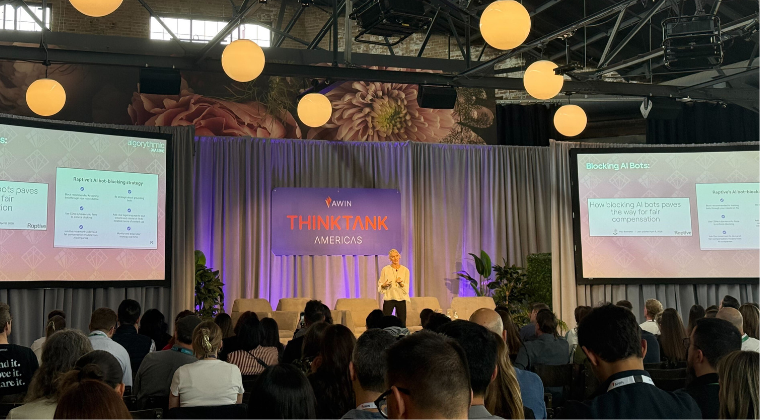
Last month at the Awin ThinkTank Americas event in Chicago, Lily Ray took to the stage to lay out what many marketers are feeling but haven’t fully processed yet:
Search hasn’t been replaced by AI. It’s being expanded, fragmented, and quietly rewritten underneath us.
So if you’re responsible for growth, acquisition, or content, this isn’t theoretical anymore. It’s operational. Here are her top, no-BS takeaways you can apply immediately.
- Stop saying “SEO is Dead” – it’s the foundation of AI search
The loudest narrative right now is also the most misleading. AI tools like ChatGPT don’t replace search engines – rather they depend on them.
- AI models frequently pull from top-ranking Google results
- Strong correlation: rank drops in Google = visibility drops in AI
- Around 81% of AI Overviews cite top-ranking pages
Reality: If your SEO is weak, your AI visibility will be too.
- AI search isn’t killing Google – it’s growing the pie
Despite the hype, Google is still approximately 13x bigger than ChatGPT on desktop. Users are starting to blend behaviours:
- AI for discovery
- Search engines for validation, visuals, navigation
Implication: You’re no longer optimising for one journey, you’re optimising for multi-touch discovery loops.
- Traffic is declining – visibility is the new KPI
This is the uncomfortable shift most teams haven’t accepted yet: AI tools are designed to keep users inside the interface, and AI Overviews increase zero-click searches significantly.
- In AI Mode, 93% of searches result in no click
Translation: Traffic is no longer the primary success metric, but influence, citation, and presence are.
- AI traffic is small – but intent is high
Most sites currently see <0.5% traffic from AI tools, but those users:
- Are deeper in the funnel
- Convert at higher rates
Think quality over quantity: AI isn’t a traffic channel, it’s a conversion amplifier.
- Structure your content like you’re writing for a machine
AI doesn’t “read” like a human, it extracts information instead. What works well:
- TL;DR summaries at the top
- Clear headings and sections
- Direct question → answer formats
- Structured comparisons
Best practice: Write like you’re briefing an assistant, not entertaining a reader.
- Q&A content is back (again) – but for a new reason
AI loves formats like these, because it can lift answers directly into responses:
- FAQ pages
- Specific, well-answered questions
- Product-level Q&A
Impact: If you don’t answer key questions about your brand, AI will use someone else’s answer instead.
- Fresh content matters more than ever (but don’t fake it!)
AI models prefer recent, updated content and use search engines to find the latest data.
However, superficial refreshes don’t work and fake “updated” timestamps get penalised.
Rule: Update content when you have something new to say, not just to look fresh.
- You don’t control the narrative – the internet does
The biggest shift? AI doesn’t just look at your site, it also looks at platforms like:
- YouTube
- Wikipedia
These are some of the most cited sources in AI responses today.
Implication: Your brand isn’t what you say it is. It’s what the internet consistently says it is.
- Affiliate and review content has massive influence
One of the biggest under-the-radar insights is that close to 25% of top cited domains in AI are affiliate/review sites, and for product queries it’s even higher. AI is heavily shaped by:
- “Best of” lists
- Comparison articles
- Review platforms
If you’re not present there? You’re invisible in AI recommendations.
- Blocking AI crawlers = choosing invisibility
Some publishers are blocking AI tools, and the trade-off is simple: Block AI to protect content. But, you also lose all visibility in AI responses.
Strategic question: Do you want traffic, or do you want influence?
- Don’t try to game it – you’ll lose
Common bad tactics like fake comparison lists, reviews or competitor attacks, and spammy AI-generated content at scale, risks:
- Google penalties
- AI model filtering
- Legal exposure (FTC fines cited in the keynote)
Short-term hacks will kill long-term visibility.
- Prepare for an “Agent-Led” future (this is the big one)
The direction of travel is clear: search is becoming task-based, not query-based. AI agents will compare products, book travel and make purchases.
Your site won’t just be read, it will be evaluated and acted upon by machines.
What you can do:
- Structure product data (feeds, schema)
- Ensure pricing, availability, and policies are machine-readable
- Prepare for integrations with platforms like Google and OpenAI
Final thought
The biggest shift isn’t technical, it’s philosophical.
We’ve spent 20 years optimising for: “How do I get the click?”
We now need to optimise for: “How do I become the answer?”
Because in an AI-first world, the winner isn’t the site that ranks… it’s the one that gets consistently summarised, cited, and trusted.
–
More from Awin Global ThinkTank 2026:
There’s a Super Bowl every day on social media. Not everyone’s got the memo.

Chris ‘Ceej’ Johnson is CMO at intent.ly. With over 15 years’ experience in digital, affiliate and performance marketing, he has a passion for all things consumer behaviour and innovative advertising.