From clicks to clarity – affiliate marketing’s most important era yet
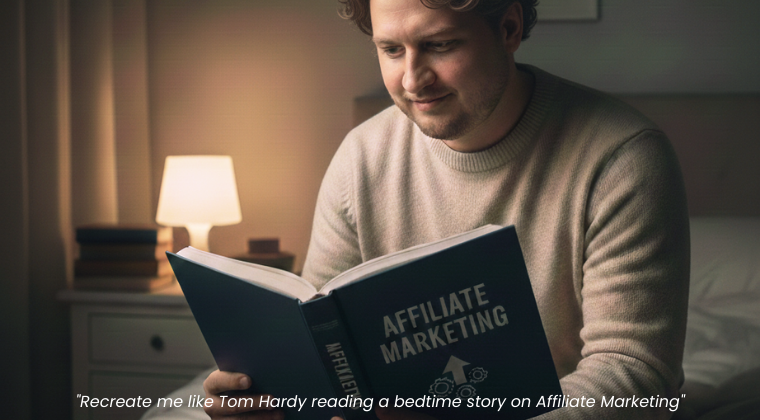
There’s been a lot of conversation recently about one thing affiliate marketing has never been particularly good at…
Storytelling.
It’s something I’ve personally been banging on about for a long time, even in 2019 during my time at Groupon I was referenced in an Awin report tackling the familiar “affiliate marketing is dead” narrative. Not because the channel was dying, but because it’s never really known how to talk about itself beyond spreadsheets and CPA charts.

Above, Awin article from 2019.
And here we are in 2026, still having the same conversation albeit it with slightly better alcohol-free lagers and slightly worse cookies.
I heard it came up as a focal point again last week at the Agency Advisory Board (AAB) inaugural meeting (congrats to Jess Smith and Kirsten Jayne Black on getting that off the ground – big moment, and seemingly long overdue).
But the theme was clear – affiliate is brilliant at delivering outcomes, yet seemingly still considerably rusty at backing itself whilst doing it. Which might explain why year after year we keep finding ourselves politely assigned the conference equivalent of the graveyard slot.
You know the one. The agenda reads:
- Influencer Marketing (with mood lighting)
- TikTok Creators (with a hype reel)
- Brand Storytelling (with a founder doing barefoot keynote energy)
- Affiliate Marketing’s Success Stories (Day 2 of 2, 4:45pm, in Room C next to the fire exit)
Not because the channel is less important, but because it’s historically been less well voiced.
And that’s starting to matter.
Storytelling now needs better data.
I’m going out on a (20+ career year) whim here – but from my perspective affiliate marketing doesn’t struggle with storytelling because we lack personality. If anything, this industry is full of smart, social, entrepreneurial people not exactly short of opinions, energy, or conference bar stamina.
The challenge is how we translate all that into a narrative the ‘outside-of-affiliate’ world buys in to. We struggle because for years we’ve largely only been able to describe ourselves through simple performance shorthand:
- Last click
- CPA
- ROAS
- “Revenue delivered”
And while those metrics are useful, they don’t create narrative. They don’t explain influence. They don’t capture decision-making. You can’t build a compelling industry story if the only chapter you ever read is the final line of the receipt.
If affiliate wants to be taken seriously as a strategic channel and not just a conversion mechanic, we need a more grown-up approach to measurement.
That means moving beyond CPA spreadsheets and into:
- Behavioural insight
- Intent signals
- Contribution across the journey
- Incrementality, not assumption
- Understanding why something worked, not just that it worked
Better storytelling is inseparable from better data maturity. Because in today’s increasingly measurable world, the story has to be true.
2026 has to be the year of action for affiliate marketing.
I’ve sat on this post for about a month, partly because I wanted to properly reflect on what I heard at the first industry conference of the year, and also because the early tone coming out of affiliate in 2026 is noticeably different to previous years. AI is also the new asteroid heading toward the affiliate traffic model, forcing us to collaborate in ways we haven’t had to before.
That’s why a recent panel moderated by Moonpull’s Steven Brown at Affiliate Summit West stuck with me.
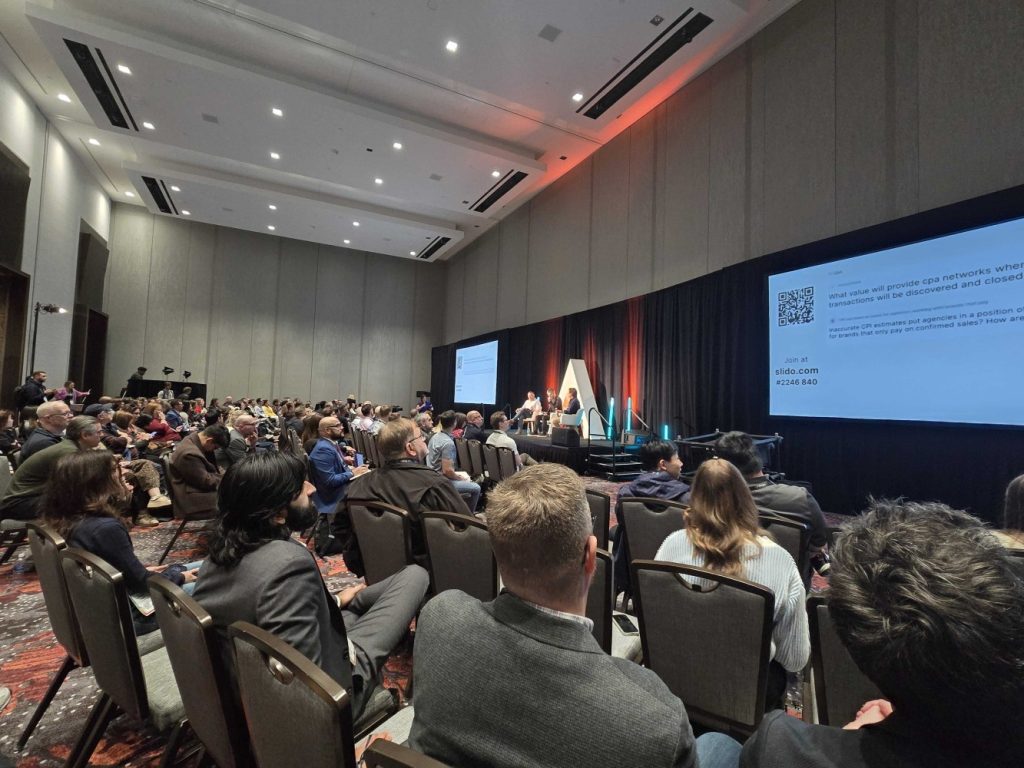
Above, panel at ASW26
It featured Adam Ross (CEO of Awin Global) and Santi Pierini (CEO of CJ), leaders from two of the industry’s most integral businesses. And if anyone has earned the right to comment on where this channel is going, it’s them.
That’s why it was worth highlighting some of the key discussions from that panel.
1. Affiliate marketing isn’t being disrupted. It’s maturing
The core takeaway from the panel discussion was quite straightforward, and I wholeheartedly agree in that affiliate marketing is not being disrupted, it is maturing.
For years, the channel has been judged by a familiar set of questions:
- Did the click convert?
- Did the sale track?
- Did CPA deliver on our budget expectations?
And for a long time, that has been enough. But the panel made it clear that those comfort metrics are starting to show their age. Because brands are now asking harder questions. Better questions. More grown-up questions.
2. The end of comfort metrics
Clicks, impressions, last-click attribution. They’ve been affiliate marketing’s security blanket. Easy to report, to compare and to wave around in QBRs.
But brands are now asking things such as:
- Why did the customer convert?
- When did intent actually form?
- Which partner influenced the decision, rather than simply converted it.
Because being present at the end of the journey isn’t the same as shaping it.
And in a world where budgets are tightening and scrutiny is rising, that distinction matters more than ever.
3. Intent is becoming the new currency
A central theme throughout the conversation was intent.
Not anonymous clicks moving through a funnel, but real behavioural signals:
- What content did a shopper engage with?
- How long did they spend considering options?
- What actions suggest genuine purchase consideration?
These signals sit much closer to decision-making than traditional affiliate metrics ever have. And crucially this isn’t about invasive tracking.
It’s about first-party behavioural data, the information brands already own, but haven’t always known how to translate into insight.
4. Privacy isn’t killing affiliate, it’s forcing it to get smarter
Rather than treating privacy regulation and cookie deprecation as existential threats, the panel positioned them as catalysts.
- A push toward better measurement. Better practice. Better trust.
- The challenge now isn’t access to data. It’s interpretation.
- It’s turning behaviour into understanding. And understanding into value.
5. Partner value is being redefined
The panel also explored how this evolution is reshaping relationships across the ecosystem.
Historically, partner value was often defined by scales of volume, conversion and revenue. But volume without context is losing its shine.
Brands are prioritising partners who can demonstrate:
- Quality over quantity
- Insight beyond attribution shortcuts
- Meaningful contribution to the journey
The ecosystem is shifting from transactional delivery to consultative partnership – and I like that. A lot.
6. Data continues to increase, but we’re short of narrative
One of the biggest points that stuck with me is that brands aren’t short of dashboards, they are short of clarity. Affiliate marketing has never lacked performance but it has lacked storytelling.
The positive in this from what I can see is that the better we get at mining intent, measuring contribution and understanding influence, the easier the storytelling becomes.
Because suddenly affiliate isn’t just a channel that “drives sales”, it’s a channel that helps explain how customers decide. And that’s a much bigger story.
An industry growing up. Now it needs to speak like one
The tone of the panel was overall optimistic and it was a great way to kickstart the year. To reassure anyone that’s still reading, affiliate marketing isn’t declining, it is however evolving into a more intelligent, intent-led era where clarity matters more than clicks, and because agentic commerce is growing and driving clicks down, contribution will begin to matter more than convenience.
But if we want to increase our seats at the “grown-up marketing table” and not the fire exit breakout room, we need better voices, better narratives and better storytelling around what this industry actually does.
It’s one of the most commercially accountable engines in digital marketing. Now we just need to start talking about it like that.

Chris ‘Ceej’ Johnson is CMO at intent.ly. With over 15 years’ experience in digital, affiliate and performance marketing, he has a passion for all things consumer behaviour and innovative advertising.